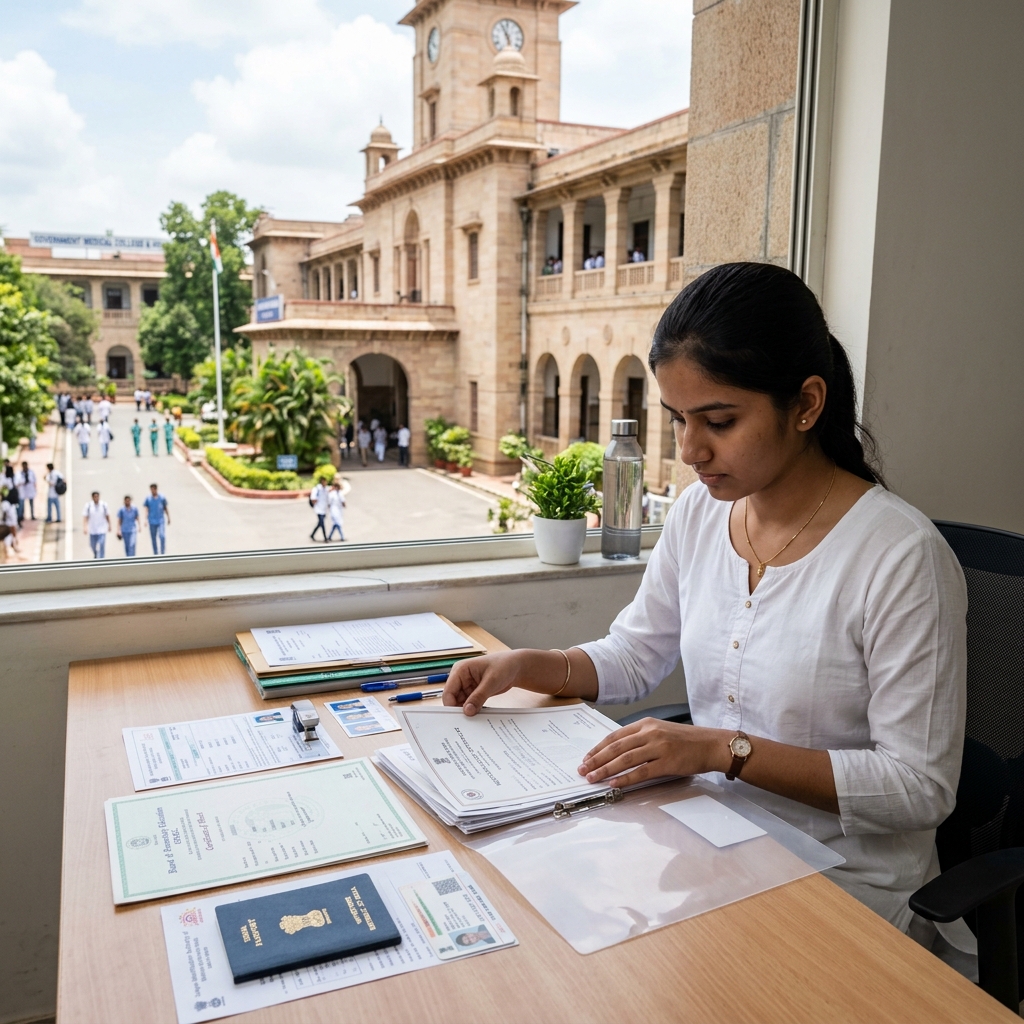



How Many Marks Are Required for MBBS in 2026? Category-wise Analysis
Every year, more than 20 lakh students appear for the NEET UG examination with one common dream—earning an MBBS seat in a reputed medical college. However, one of the biggest questions students and parents ask after the exam is:
"How many marks are actually required to get an MBBS seat in 2026?"
The answer isn't as simple as a single number. It depends on several factors, including:
- Your category (General, OBC, SC, ST, EWS)
- Whether you're targeting a Government or Private Medical College
- Your state domicile
- Number of MBBS seats available
- Overall difficulty level of the NEET paper
- Number of students appearing for the exam
With MBBS seats expected to increase further in 2026, competition remains intense because the number of applicants is also growing. Reports indicate that India may approach 1.4 lakh MBBS seats across government and private colleges, but demand continues to far exceed supply.
This guide provides an expected category-wise analysis based on recent counselling trends, previous years' cut-offs, and expert estimates.
NEET Qualifying Marks vs MBBS Admission Marks
Many students confuse qualifying marks with admission marks.
These are not the same.
Qualifying Marks
These are the minimum marks required to become eligible for counselling.
Admission Marks
These are the scores actually needed to secure an MBBS seat.
For example, a General category student may qualify with around 135–150 marks (expected) depending on the official cutoff, but that score is generally far below what is needed for a Government MBBS seat.
Expected Safe Score for Government MBBS in 2026
| Category | Expected Safe Score |
|---|---|
| General | 620–680+ |
| EWS | 610–670+ |
| OBC | 590–650+ |
| SC | 500–570+ |
| ST | 460–540+ |
These are expected ranges based on previous counselling trends and may vary by state, institute, and counselling round.
General Category Students
The General category faces the toughest competition because of the large number of candidates and limited unreserved seats.
Expected Score
- 620–680+ for a good chance in Government Medical Colleges
- 680+ for top institutions like AIIMS and leading Government Medical Colleges
- 550–620 may still offer opportunities depending on the state quota, counselling rounds, or some private colleges.
Tips
Students should participate in:
- AIQ (All India Quota) counselling
- State counselling
- Deemed University counselling
- Private Medical College counselling
OBC Category
OBC candidates receive reservation benefits in eligible seats, but competition remains high.
Expected Score
- 590–650+ is generally considered competitive for many Government Medical Colleges.
- Scores above 630 significantly improve the chances of securing a preferred college.
Students should ensure that their valid OBC-NCL certificate is available before counselling.
EWS Category
The EWS reservation has opened additional opportunities for economically weaker candidates in the unreserved pool.
Expected Score
- 610–670+ may provide a competitive chance for Government MBBS admission.
- Top Government colleges usually require substantially higher scores due to intense competition.
SC Category
Reserved seats help improve admission opportunities, although competition continues to increase every year.
Expected Score
- 500–570+ may provide a competitive chance in many Government Medical Colleges.
- Some state counselling rounds may close at different scores depending on seat availability and demand.
ST Category
The expected score for ST candidates is comparatively lower because of reservation, but admission depends on state-wise counselling and available seats.
Expected Score
- 460–540+ may remain competitive in many counselling scenarios.
- Cut-offs differ considerably between states and institutions.
What If Your Score Is Between 500 and 600?
Many students believe that scoring below 600 means the dream of becoming a doctor is over. That is not necessarily true.
Depending on your category, state quota, and counselling strategy, you may still have opportunities through:
- State Government Medical Colleges
- Private Medical Colleges
- Deemed Universities
- MBBS Abroad (for NEET-qualified candidates)
Experts consistently advise students to participate in every counselling round, including Mop-Up and Stray Vacancy rounds, because seats may become available later in the process.
Factors That Affect MBBS Cut-Off Every Year
The required marks for MBBS change annually because of:
- Number of students appearing for NEET
- Difficulty level of the examination
- Total MBBS seats available
- Reservation policy
- Counselling trends
- Number of students opting for private or foreign medical colleges
This is why no institute can guarantee an exact score requirement before the official counselling process begins.
Frequently Asked Questions (FAQs)
Is 600 marks enough for MBBS?
It can be competitive for many colleges, particularly under certain state quotas or reserved categories, but admission depends on your category, state, rank, and counselling trends.
Can I get Government MBBS with 550 marks?
It is possible for some reserved categories and in certain states, but it cannot be guaranteed. Students should participate in all counselling rounds.
Is 650 a safe score?
For many candidates, 650 is considered a strong score for Government MBBS admission, though top institutions may still require even higher ranks.
Does EWS have a lower cut-off than General?
Yes. EWS has reserved seats, but the competition remains very strong, and required scores are still relatively high.
Are qualifying marks enough to get MBBS?
No. Qualifying only makes you eligible for counselling. Actual admission generally requires significantly higher scores than the qualifying cutoff.
Final Thoughts
There is no single "magic number" that guarantees an MBBS seat in 2026. Your chances depend on your NEET score, AIR (All India Rank), category, state quota, and counselling strategy.
As a broad expectation:
- General: 620–680+
- EWS: 610–670+
- OBC: 590–650+
- SC: 500–570+
- ST: 460–540+
Remember that these are expected safe score ranges, not official cut-offs. The final admission marks will be determined only after the NEET 2026 results, counselling process, and seat allotment rounds are completed. Students should keep track of official announcements from NTA and the Medical Counselling Committee (MCC), apply to all eligible counselling rounds, and maintain realistic college preferences based on their rank.