

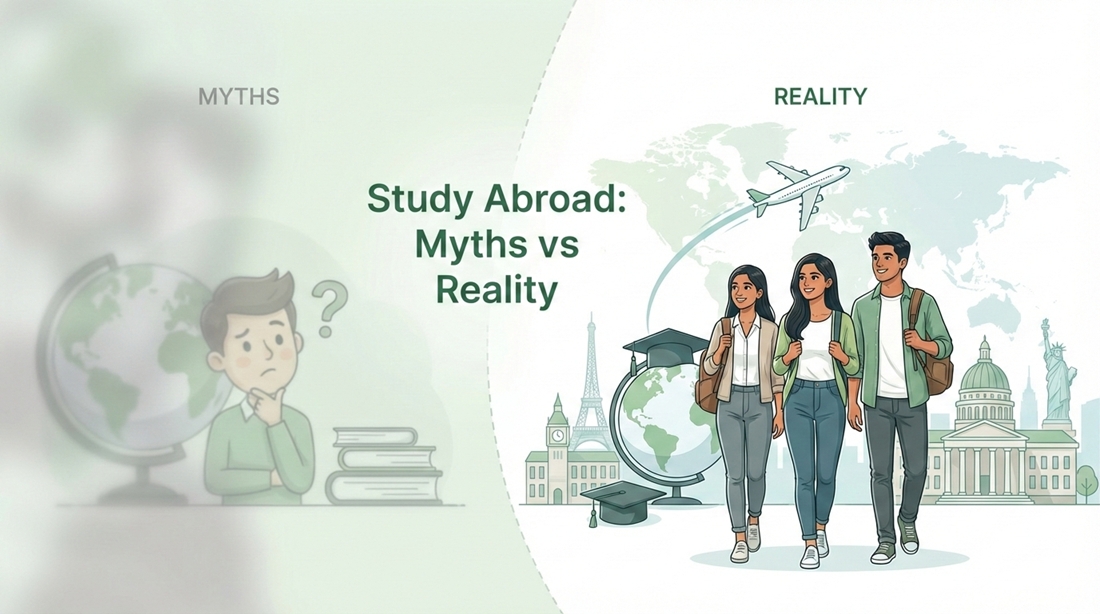
For thousands of students in India, studying abroad is a dream filled with excitement, ambition, and hope. At the same time, it is surrounded by confusion, fear, and misinformation. Stories from friends, relatives, and social media often blur the line between facts and assumptions.
The truth is simple: most barriers to studying abroad are not real obstacles, but myths.
In this blog, we break down the most common study abroad myths and explain the reality behind them—so you can make informed decisions with confidence.
Myth 1: Studying Abroad Is Only for Rich Students
This is perhaps the most widespread myth.
Many students believe that studying abroad requires massive financial resources and is only possible for wealthy families. While international education does involve costs, it is far more accessible today than it was a decade ago.
The Reality
There are multiple financial support options available:
-
Scholarships (merit-based, need-based, country-specific)
-
Education loans with flexible repayment options
-
Affordable universities in countries like Germany, Poland, Hungary, Latvia, and parts of Canada
-
Part-time work opportunities during studies
With proper planning and guidance, students from middle-class backgrounds successfully study abroad every year.
Myth 2: You Must Have Top Academic Marks
Many students give up on their dreams because they feel their marks are “not good enough.”
The Reality
Universities abroad focus on holistic profiles, not just marks.
Admissions committees consider:
-
Academic background (not only percentages)
-
Statement of Purpose (SOP)
-
Relevant skills or experience
-
Projects, internships, or work exposure
-
Motivation and career clarity
While high marks help, average students with strong profiles are equally welcomed at many universities worldwide.
Myth 3: IELTS Is Mandatory Everywhere
The fear of English language tests stops many students from even starting the process.
The Reality
IELTS is not mandatory for all universities.
Many institutions accept:
-
Medium of Instruction (MOI) certificates
-
Alternative tests like Duolingo or TOEFL
-
Internal English assessments
-
Conditional offers with language support programs
Depending on your academic background and chosen country, you may have multiple options beyond IELTS.
Myth 4: You Cannot Work While Studying Abroad
Some believe that international students are not allowed to work and must depend entirely on family support.
The Reality
Most popular study destinations allow legal part-time work for international students.
Examples:
-
20 hours per week during semesters
-
Full-time work during vacations
-
On-campus and off-campus opportunities
Part-time jobs help students manage living expenses, gain global exposure, and build confidence—without affecting their studies when balanced properly.
Myth 5: Studying Abroad Means Being Alone and Unsupported
Parents often worry that their children will struggle without help in a foreign country.
The Reality
Universities and education consultants provide strong support systems, including:
-
Pre-departure orientation
-
Accommodation assistance
-
Airport pickup (in many cases)
-
International student support offices
-
Cultural integration programs
With the right guidance, students are never truly alone.
Myth 6: Visa Rejections Are Very Common
Fear of visa rejection discourages many deserving students from applying.
The Reality
Visa success depends on:
-
Proper documentation
-
Genuine intent to study
-
Clear financial planning
-
Strong academic and career alignment
When applications are prepared professionally and honestly, visa success rates are high.
Myth 7: Studying Abroad Guarantees a Job Instantly
This myth creates unrealistic expectations.
The Reality
Studying abroad improves employability, but success depends on:
-
Skills acquired during the course
-
Internships and part-time experience
-
Networking
-
Industry relevance of the program
International education opens doors, but students must actively build their careers.
Why Understanding the Reality Matters
Believing myths can:
-
Delay your career plans
-
Create unnecessary fear
-
Push you toward wrong decisions
-
Make you miss real opportunities
Understanding the reality helps you:
-
Plan better
-
Choose the right country and course
-
Manage finances wisely
-
Stay confident and focused
How Proper Guidance Makes the Difference
Every student’s journey is unique. What works for one may not work for another. That’s why personalized counselling is crucial.
Right guidance helps with:
-
University shortlisting
-
Eligibility assessment
-
Test alternatives
-
Financial planning
-
Visa documentation
-
Pre- and post-admission support
Final Thoughts
Studying abroad is not a fantasy reserved for a few—it is a well-planned journey available to many.
When myths are replaced with facts, fear turns into clarity, and dreams become achievable goals.
If you’re considering studying abroad, the first step is not an application—it’s correct information.
Thinking About Studying Abroad?
If you want clarity about:
-
Your eligibility
-
Affordable options
-
Test requirements
-
Scholarships and visas
Professional guidance can help you take the right step at the right time.
Smile Career Consultancy believes in honest counselling, transparent processes, and realistic guidance—so students can navigate their future with confidence.